
The fourth annual Miami Conference on Global Democracy, hosted by the Steven J. Green School of International and Public Affairs at Florida International University, convened leading scholars, policymakers and community members on April 7, 2026, for a full day of dialogue on the state and future of democracy. With approximately 800 participants attending throughout the day, the conference marked a significant milestone in the growth of what quickly became one of the university’s signature global forums.
Opening the conference, Dean Shlomi Dinar emphasized both the urgency and responsibility of engaging with democratic challenges in an increasingly complex global landscape. “At the Green School, we believe our responsibility is not only to study global challenges, but also to convene conversations that help inform policy and strengthen democratic institutions. Events like today’s conference are an important part of that mission,” he noted, setting the tone for a day of rigorous and forward-looking discussion.
The conference was sponsored by the Dorothea Green Lecture Series and co-sponsored by the Václav Havel Program for Human Rights & Democracy. It was presented in collaboration with the George W. Bush Institute and the Jarl Hjalmarson Foundation, reflecting a strong network of institutional partnerships dedicated to advancing democratic values worldwide.
Now in its fourth year, the conference continues to grow in both scale and impact, bringing together voices from academia, government, civil society and the private sector.
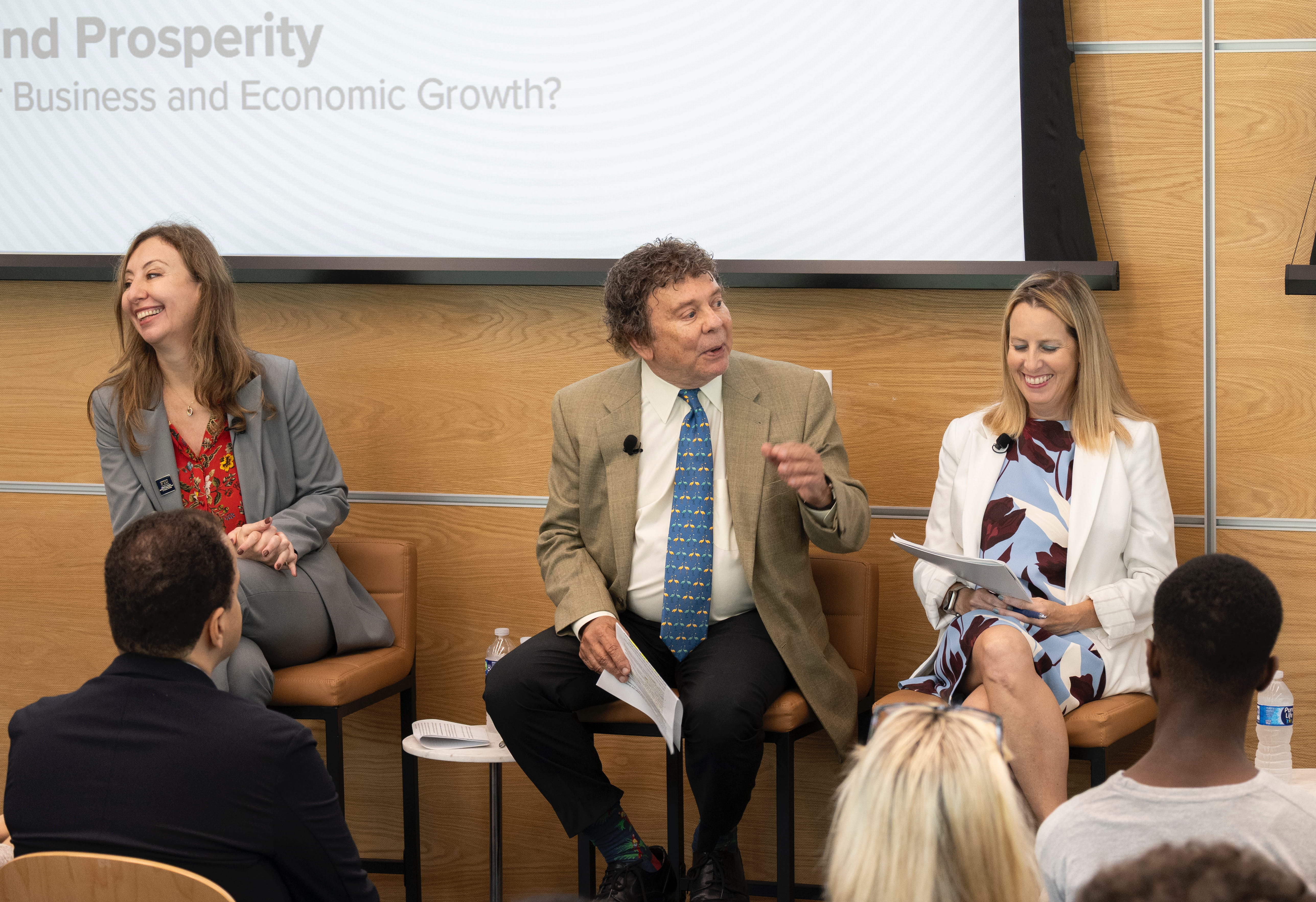
The first panel, “Political Systems and Prosperity,” moderated by Mihaela Pintea of FIU’s Department of Economics, explored how governance structures shape economic growth and business environments. Featuring experts including Eugenio Alemán of Raymond James, Margalit Edelman, Jerry Haar of FIU’s College of Business, and Cem Karayalcin of FIU’s Department of Economics, the discussion examined how democracies compare with more centralized systems in delivering stability, regulatory certainty and long-term prosperity. Panelists emphasized that while democracies provide transparency and accountability, they must continually demonstrate their ability to deliver inclusive economic outcomes in a competitive global landscape.
“On average democracies do better by increasing per capita income by about 20% and evidence proves a long tradition of democracy has an impact on economic outcomes. A recent study of 175 countries from 1960-2010 reviewed conversions from democracies to autocracies and sometimes back, found the investments in both physical and human capital, the two main components determining increases in per capita income, promote growth,” said FIU Economics Professor Cem Karayalcin.
The second panel, “The Indo-Pacific and the Future of Democratic Alliances,” moderated by Brian Fonseca, Vice Provost for Defense and National Security Research and Director of the Jack D. Gordon Institute for Public Policy, focused on the strategic importance of democratic cooperation across regions. Panelists Thomas Breslin of FIU and retired Rear Admiral Michael Studeman examined how alliances must adapt to emerging challenges including geopolitical competition, technological change, and climate pressures. The panel also featured a special recorded message from Tsai Ing-wen, former President of Taiwan, underscoring the global significance of democratic solidarity.
“Democracies must make sure they are still united and even more committed to tackling uncertainties and challenges. Now is the consequential time for outrage and adaptation. The rules of engagement are rapidly changing as must our collective strategies. Taiwan is ready to assist in times of global upheaval with forms of unity and cooperation such as the support and transfer of military or technological capabilities to support and develop closer trade ties among democratic countries,” said Ing-wen.
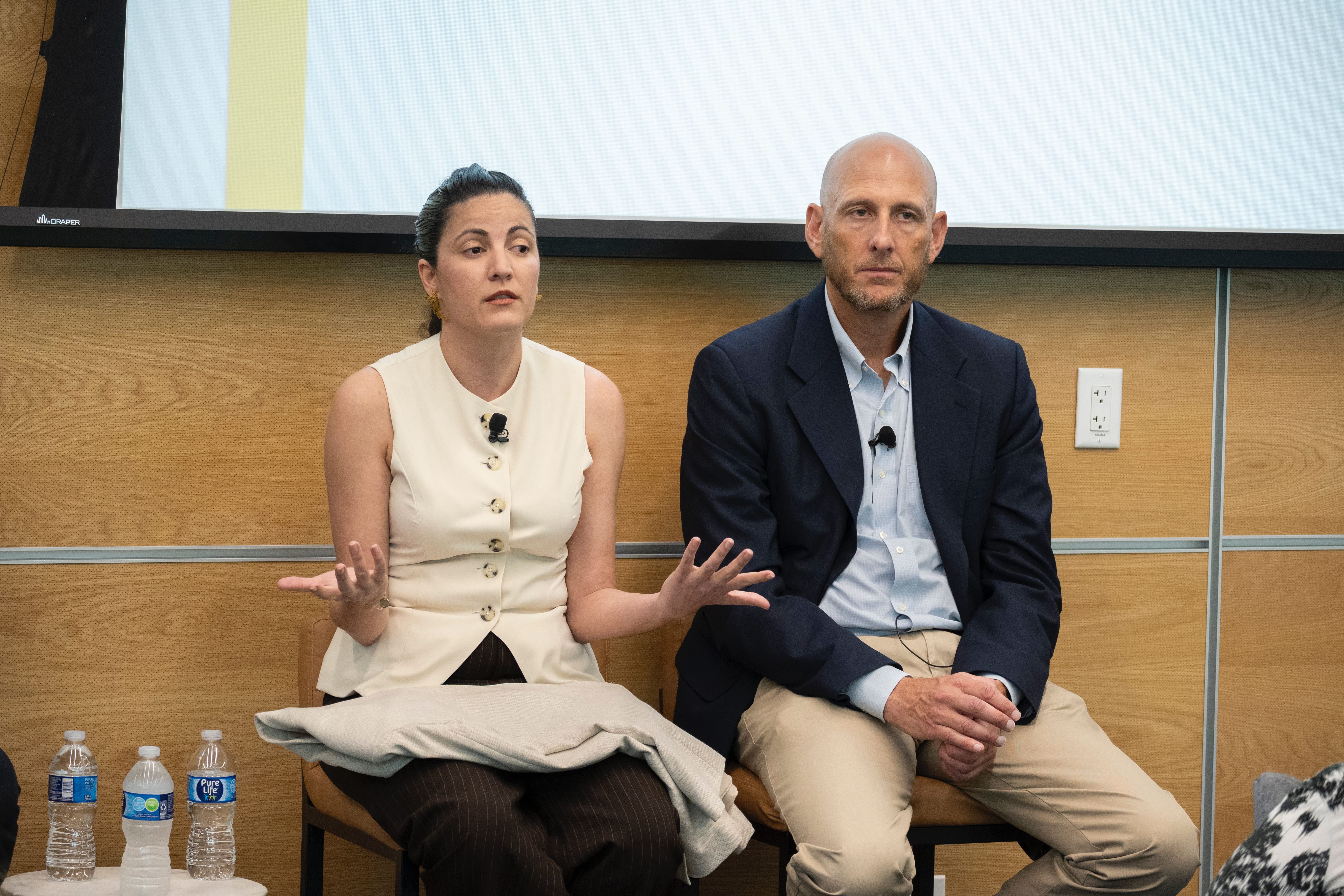
The third panel, “After Authoritarianism: What’s Next?” addressed pathways for democratic transition in countries facing entrenched authoritarian rule. Moderated by David J. Kramer of the George W. Bush Institute, the panel brought together Natalia Arno of the Free Russia Foundation, Eric Lob of FIU, Rosa María Payá of Cuba Decide, and Pedro Urruchurtu of the office of María Corina Machado. Drawing on cases such as Venezuela, Iran, Cuba and Russia, panelists highlighted both the structural obstacles to democratic change and the moments of opportunity that can emerge through civic engagement and international support.
“During the past three decades we haven’t seen a democratic transition in the world by students protesting and communist regimes collapsing, even though all these regimes are extremely fragile. They are not under sufficient pressure from outside their countries, and although the citizen movements are using more technology, more organization and receiving more training the actions of the global democracies have been absent. My theory of change in Cuba is the people must want the system to change, the democratic alternative must come from inside and outside of the country, and real action is needed from the international community, not just the U.S. The pressure must be consistent, sustained and overdone to push the people in power out”, said Payá.
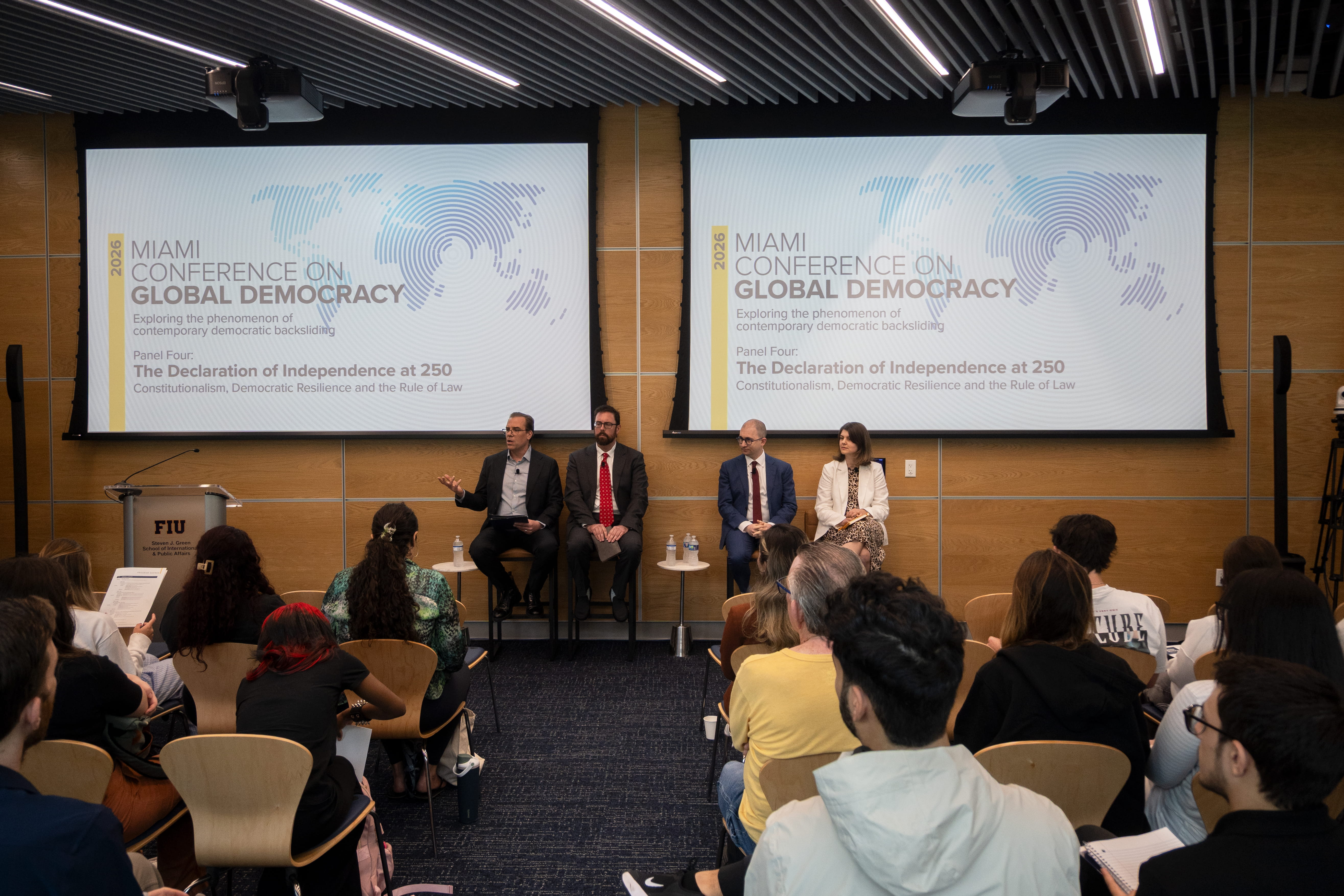
The final panel, “The Declaration of Independence at 250: Constitutionalism, Democratic Resilience and the Rule of Law,” moderated by Clem Fatovic of FIU, offered a historical and forward-looking perspective on democratic governance. Panelists Yana Gorokhovskaia of Freedom House, Adam Lebovitz of the University of Florida, and Chris Walsh of the George W. Bush Institute reflected on the enduring relevance of constitutional principles and the challenges posed by democratic backsliding and the erosion of institutional norms.
“The lesson Americans can draw from the world is that democracy can be lost and democracy can be rebuilt. We focus a lot on a democratic decline and authoritarianism but there are many cases whether its Guatemala, Liberia, Poland and Bhutan. Bhutan over the last 20 years has transformed from an absolute monarchy to an electoral democracy with a parliament and elected government. They are located next to China, so if they can do it in China’s shadow lots of other countries could do it. The lesson Americans should take from these examples is you can defend and restore democracy; the question is how to do that. To look for democratic solidarity with civil society at home and abroad,” said Gorokhovskaia.
In her summary remarks, Professor Juliet Erazo emphasized that democracy is not only a system of governance, but a lived and evolving experience shaped by institutions, culture, and human agency. Across all four panels, a central message emerged: the future of democracy will depend on how effectively societies respond to inequality, sustain alliances and navigate political transitions.
Closing the conference, Professor Megdalynn Fischer underscored the essential role of citizens—especially students—in sustaining democratic systems. Engagement, she noted, begins with being informed and continues through active participation in civic life, forming the foundation of democratic resilience.
The 2026 Miami Conference on Global Democracy was, by all measures, a resounding success. It not only fostered meaningful dialogue across disciplines and sectors, but also reinforced the role of the Green School and Florida International University as conveners of critical global conversations.
At a time when democratic systems worldwide face mounting challenges, the conference offered something equally important: a space for thoughtful engagement, informed debate and renewed commitment. As participants departed, they carried forward not only new insights, but also a shared understanding that democracy is an ongoing endeavor—one that requires vigilance, collaboration and active participation.