

Parliamentary professionals from across the Caribbean gathered at Florida International University’s Steven J. Green School of International & Public Affairs for a two-day regional workshop exploring how artificial intelligence and digital technologies can strengthen legislative institutions and help them better serve citizens.
The Caribbean Regional Workshop: Applying AI and Digital Solutions to Modernize Parliamentary Practice brought together parliamentary staff and experts for hands-on training, peer exchange, and discussion about the opportunities and challenges presented by rapidly evolving technologies.
Hosted at the Green School International Pavilion, the workshop was organized in collaboration with the House Democracy Partnership, POPVOX Foundation, and ParlAmericas, building upon an ongoing regional effort to strengthen democratic institutions through technological innovation and cooperation.
Dr. José Miguel Cruz, interim director of the Green School’s Kimberly Green Latin American and Caribbean Center, welcomed participants on behalf of Green School Dean Shlomi Dinar and FIU.
Serving as a convening space for conversations about pressing global issues is central to the Green School’s mission. Through conferences, workshops and public programs, the School brings together scholars, policymakers, practitioners and community leaders to exchange ideas, confront shared challenges and develop new avenues for collaboration. Conversations that contribute to stronger and more resilient democratic institutions are an important part of that work.
“Universities have an important role to play as conveners, creating spaces where people from different countries and institutions can come together to address the challenges that transcend national borders,” said Dinar. “At the Green School, we are especially committed to fostering conversations that strengthen democratic institutions, encourage collaboration and connect ideas with practical solutions.”
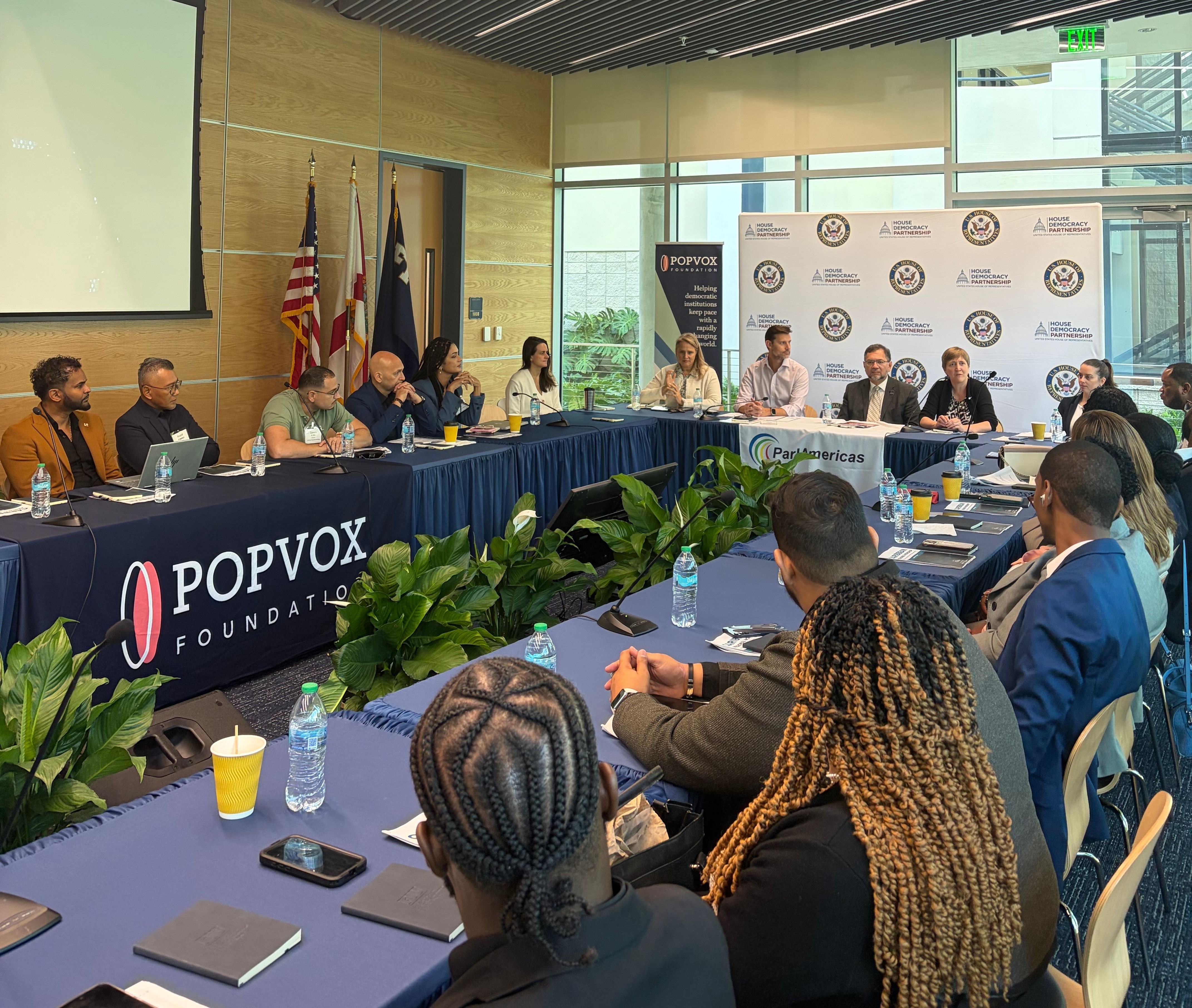
The gathering reflected that commitment while creating an opportunity for practitioners to exchange knowledge across national borders. Caribbean nations, many of which have maintained some of the hemisphere’s strongest democratic traditions, offer particularly important perspectives on how democratic institutions can adapt to technological change while preserving transparency, accountability and public trust.
Those questions were at the heart of the workshop.
As artificial intelligence and other emerging technologies develop at extraordinary speed, governments and legislatures face what some organizers described as a global “pacing problem”: technological capabilities are advancing faster than many institutions can develop the systems, expertise and policies needed to use them effectively and responsibly.
Rather than approaching technology as an end in itself, the workshop focused on practical ways digital tools can strengthen the everyday work of parliaments.
The breadth of participation underscored the regional nature of the gathering, with parliamentary delegations representing Antigua and Barbuda, Aruba, Barbados, Belize, the British Virgin Islands, the Cayman Islands, Curaçao, Dominica, Grenada, Guyana, Jamaica, Saint Kitts and Nevis, Saint Lucia, Sint Maarten, Suriname, The Bahamas, and Trinidad and Tobago.
Participants included senior parliamentary officials and professionals whose work is central to the day-to-day functioning and modernization of their institutions.
Over two days, participants explored how artificial intelligence and digital technologies are reshaping the work of legislatures, with discussions ranging from institutional modernization and responsible AI use to document management, legislative digitization and the skills parliamentary professionals will need in an increasingly digital environment.
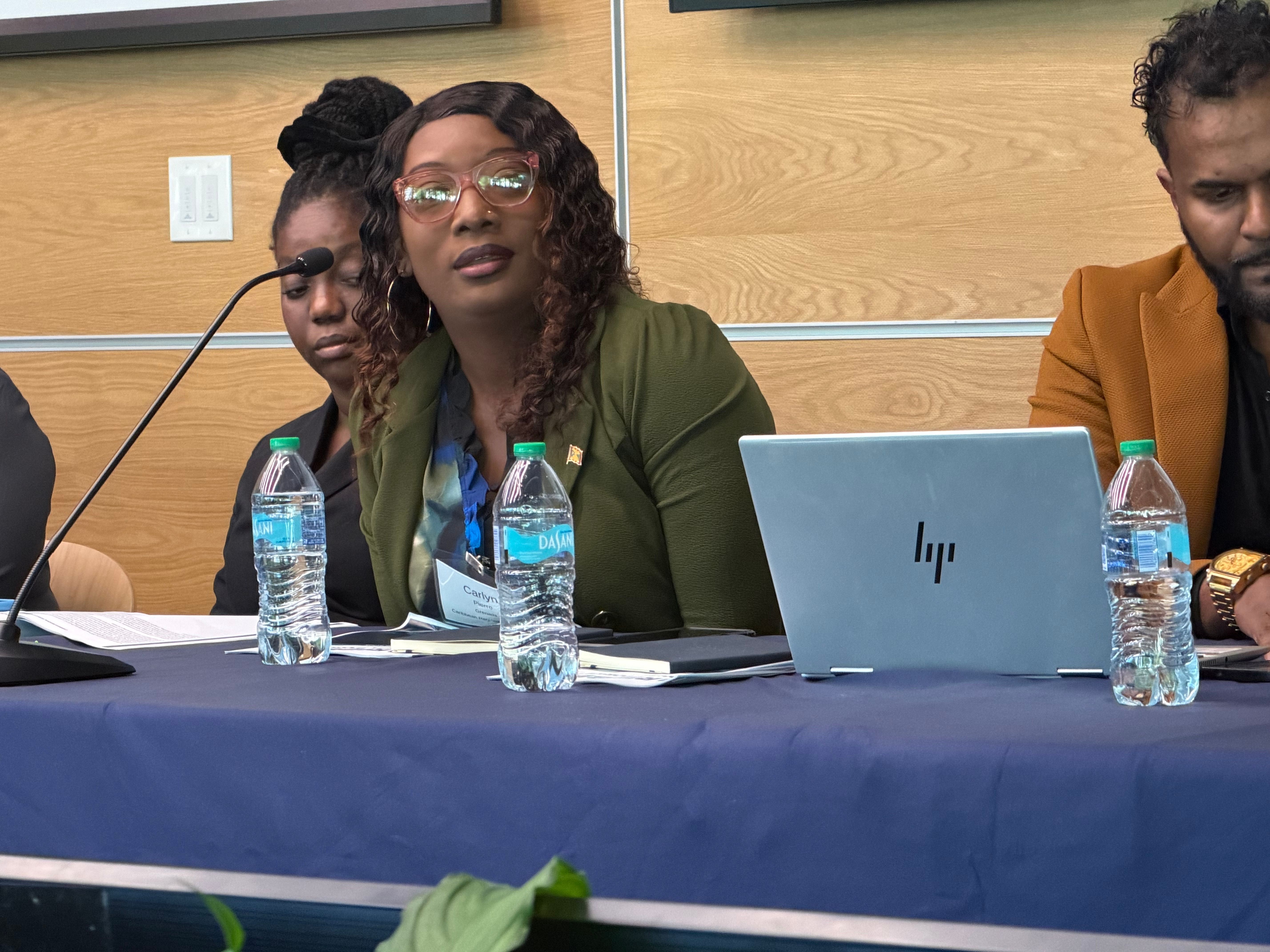
The workshop combined expert presentations with hands-on exercises and small-group discussions, allowing participants to move beyond broad conversations about emerging technology and consider how new tools might address practical challenges within their own institutions. Participants also explored ParlLink, an open-source platform designed to help legislatures manage documents and incorporate AI-assisted analysis into parliamentary work.
Throughout the workshop, particular emphasis was placed on peer learning and regional cooperation. Parliamentary professionals shared experiences from their own institutions, identified common challenges and considered areas where Caribbean legislatures could collaborate on shared tools, standards and approaches rather than developing solutions independently.
That spirit of regional cooperation extended beyond the formal program. A networking reception gave participants and partners an additional opportunity to continue conversations, strengthen professional relationships and consider possibilities for future collaboration.
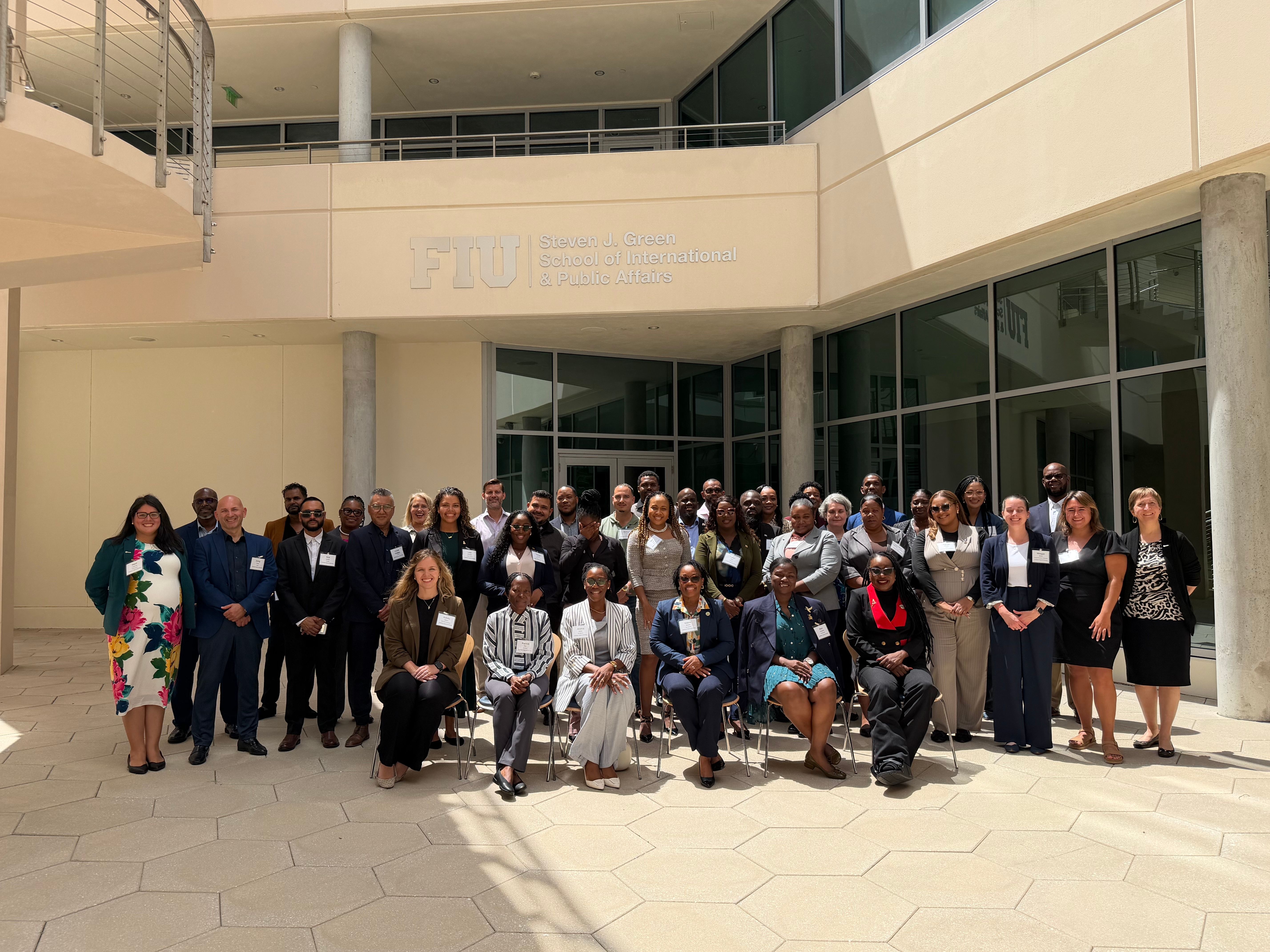
The Miami workshop built upon a regional conversation that began with a 2024 gathering at which Caribbean parliamentarians were asked to consider a deceptively simple question: What is one project that could benefit every parliament in the region?
The resulting work has demonstrated the possibilities created when parliamentary institutions pool knowledge, develop shared tools and learn from one another.
At FIU, the workshop also underscored Miami’s unique role as a meeting point for the Caribbean, Latin America, and the US. By bringing parliamentary professionals together with organizations working at the intersection of democracy and technology, the Green School provided a space where regional expertise could be connected with new ideas and practical solutions.
The workshop concluded with a shared recognition that artificial intelligence will continue to transform the environments in which democratic institutions operate. The challenge for parliaments is not simply to keep pace with technology, but to determine how it can be used responsibly to make institutions more effective, transparent, and responsive.
For the Caribbean participants gathered at FIU, modernization emerged not simply as a technological challenge, but as an opportunity for regional cooperation, and for strengthening the democratic institutions at the heart of public life.